
It started last Christmas. My friends Troy and Katie sent us an epoxy resin starter kit from Amazon EU* that included a couple of bottles of A/B mix, some mica powder colors, and some mixing tools. When I called to thank them, Troy explained that there was more coming.
“Great,” I responded. Then we waited for the next package to arrive. When it did, it contained the final thing we needed to actually play with the resin kit: a silicon mold. See, the way this works is you mix up the liquid resin, add in some color or glitter or what have you, and then pour the whole thing into a mold. Without the mold, you’re not really making anything, instead, just doing a lot of mixing. It’s like mixing up the cake batter but then just leaving it in the bowl.
So when the gift molds showed up, I understood the nefariousness of their plan. They had sent a kit for making our own chess set – including a full complement of pieces and a board.
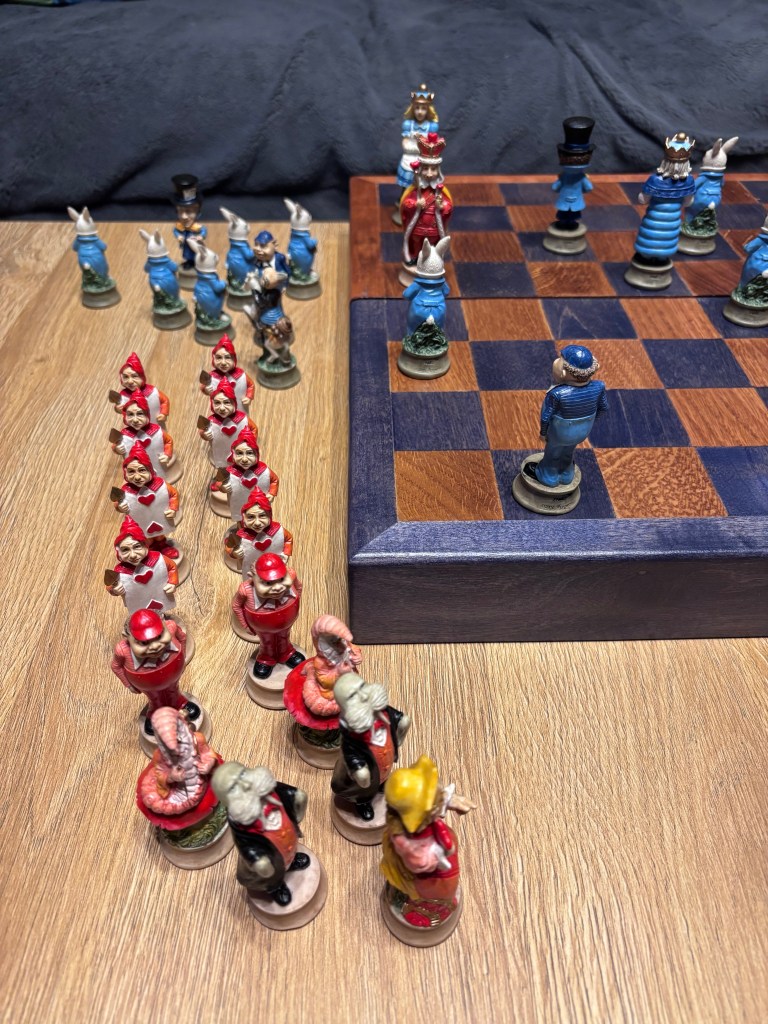
The idea was two-fold. First, it was something fun Monki and I could do together, and second, it would be an introduction for her to really start learning chess. Now, to be fair, she knows how to play (at least she knows how the pieces move) and she’ll often ask me to play a game with her. The problem is that the set she wants to play with is a beautiful, custom made Alice in Wonderland board (the pieces I got from mom and dad and the board was a gift from my friends Jovita and Ignas). It’s a gorgeous set, but it’s also big and heavy and takes up a lot of room to set up. What this means is that, more often than not, I demure and we end up not actually playing.
It should also be noted** that Troy and Katie have gifted Monki with various STEM gifts in the past, so their sending over a hands-on gift is completely in line with their gift-giving aesthetic.
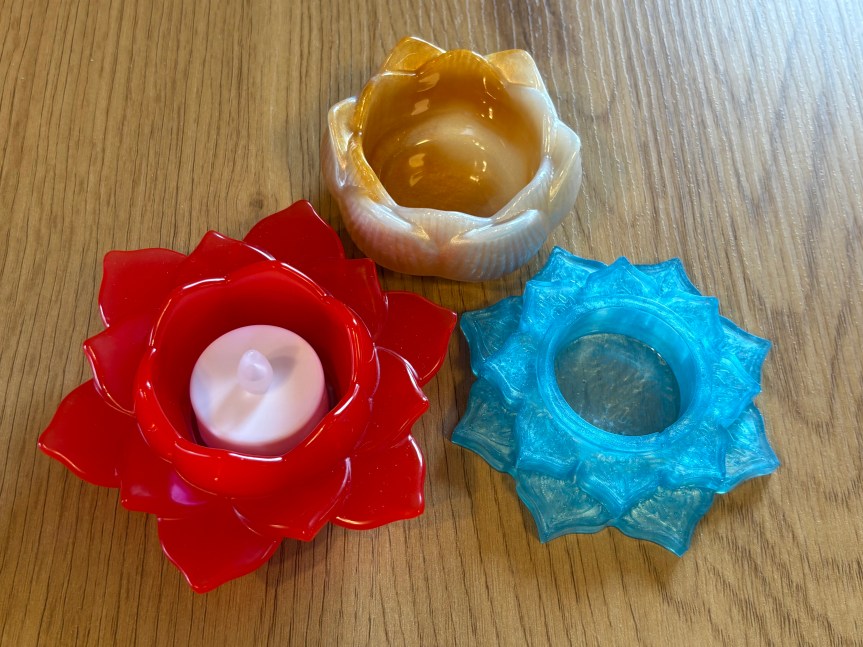
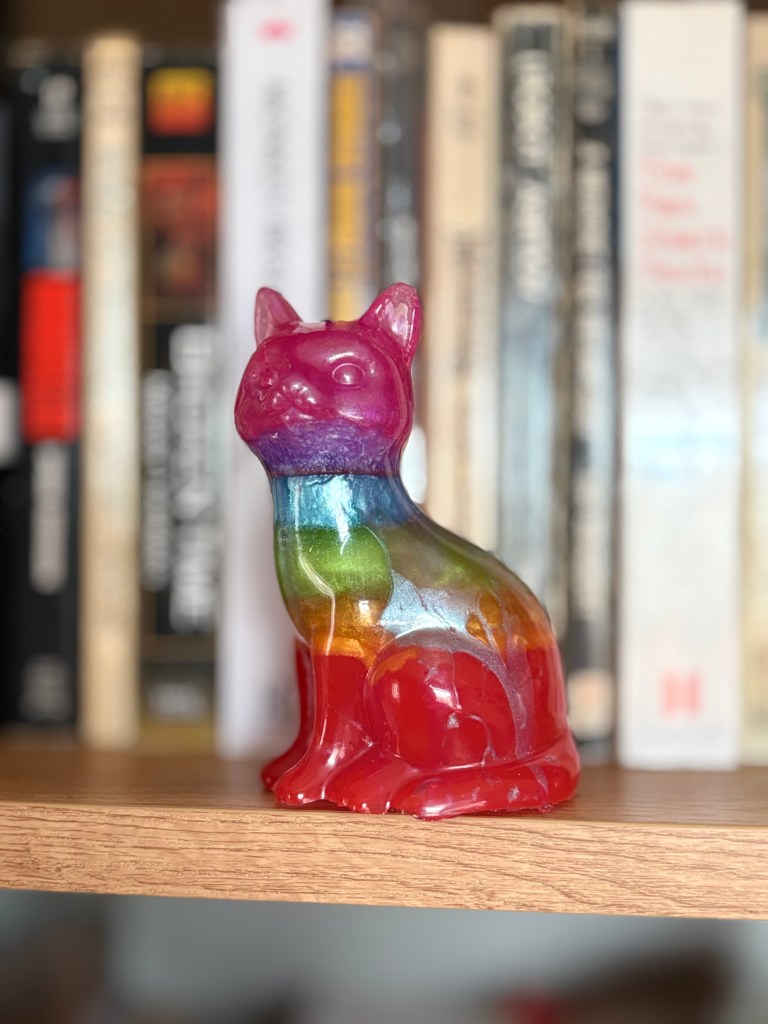
So, with all of the materials now in hand, we were anxious to get started. So anxious, in fact, that Monki insisted we order a couple more molds, including a set of pyramids, three different flower-shaped candleholders, a cat, and a tray of block letters. The reason for this is we didn’t want to screw up the chess set. Of course, the molds themselves are almost infinitely reusable, and while the pieces seemed pretty straightforward, the board appeared to be a bit more complicated. We also watched a few videos and ordered a (completely useless, if I’m being honest) guidebook to kind of teach ourselves what we were doing. Ultimately, though, we just had to bite the bullet, mix the liquids, and hope for the best.
Which is what we did.
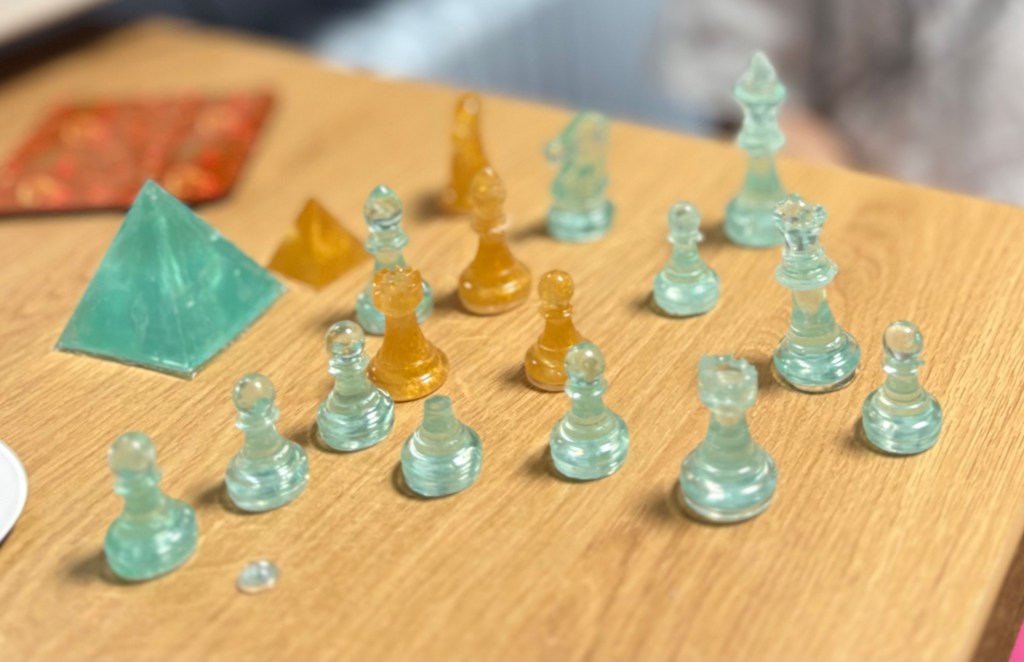
Of course, we didn’t jump right into the chess set. Nope, we mixed up some different colors and poured them into the pyramids and the cat. We also filled a few of the chess pieces with the extras, learning all about air bubbles and how much color we needed to add into our mixtures. It was all a wonderful learning experience.
It was also around this time that Monki discovered a YouTuber named Mark Rober, a former NASA engineer, who has a channel called Crunch Labs where he teaches kids about engineering principles. Monki has jumped headfirst into this (and developed a little crush on Rober along the way). This will come into play in a minute.
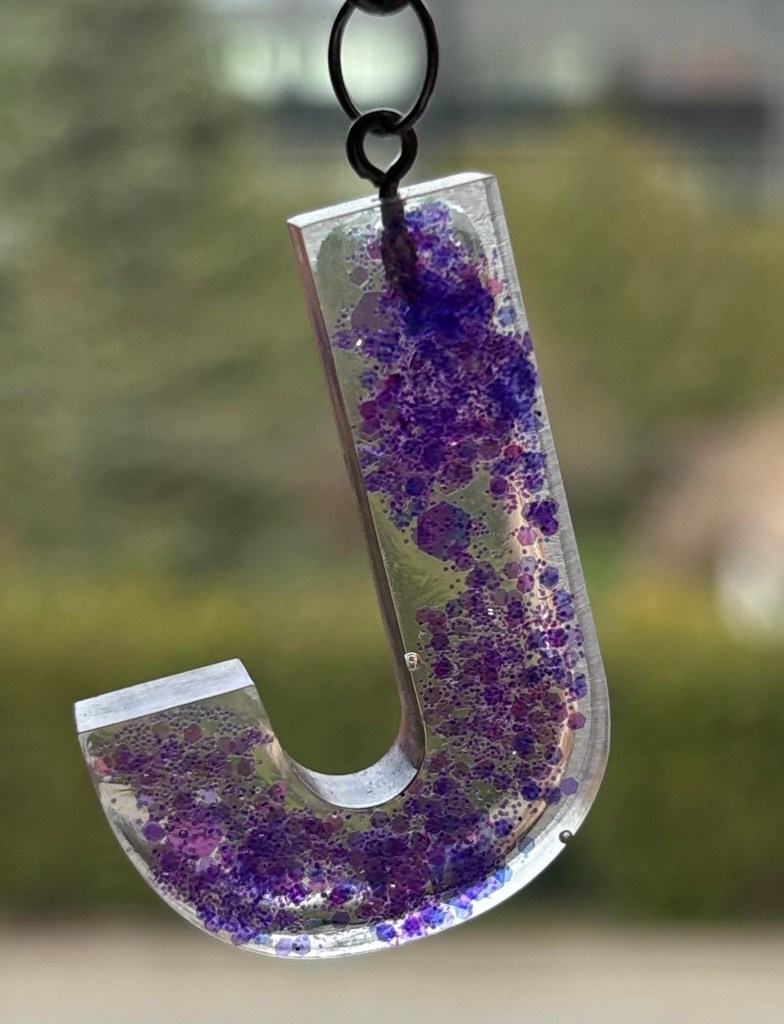
Anyway, we started making resin creations and having a blast doing it. Monki had decided on a blue and purple color scheme for our chess board, so we mixed up a batch of blue, poured the pieces and started first set of squares on the board. We also mixed up a batch of other colors and some clear resin, which we poured into the letters with some glitter to make pretty keychains.
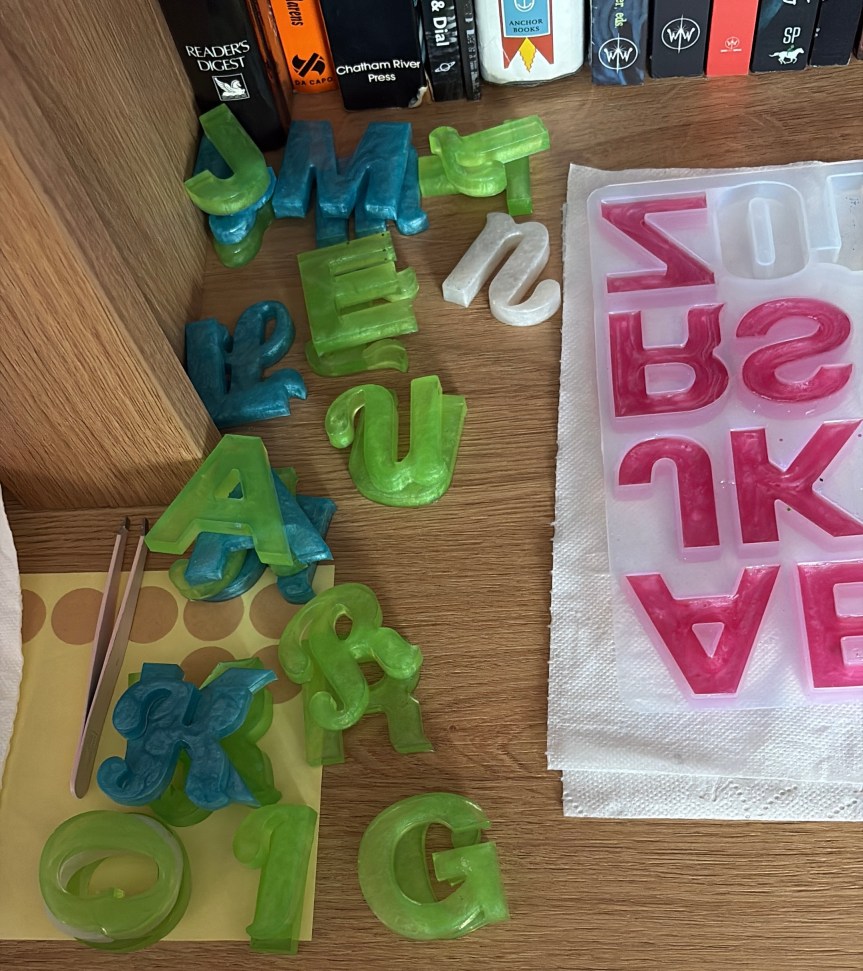
This led to Monki showing her friends at school and taking keychain orders for all of her friends, different letters and glitter colors. We had a list. We also had a discussion about capitalism when she told me she was going to be giving these letters away. In order to recoup costs, though, she decided to make a bunch of keychains in different colors to sell at the school’s spring mugė (basically a student-run market). This started a run of making letters every night (by this time we’d gotten a second alphabet mold set, this one in italics), so we’d have enough by the time the mugė came around. Of course, this also meant Rasa and I were up all night the night before drilling and screwing together the keychain parts, but that’s a parental rite of passage, innit?
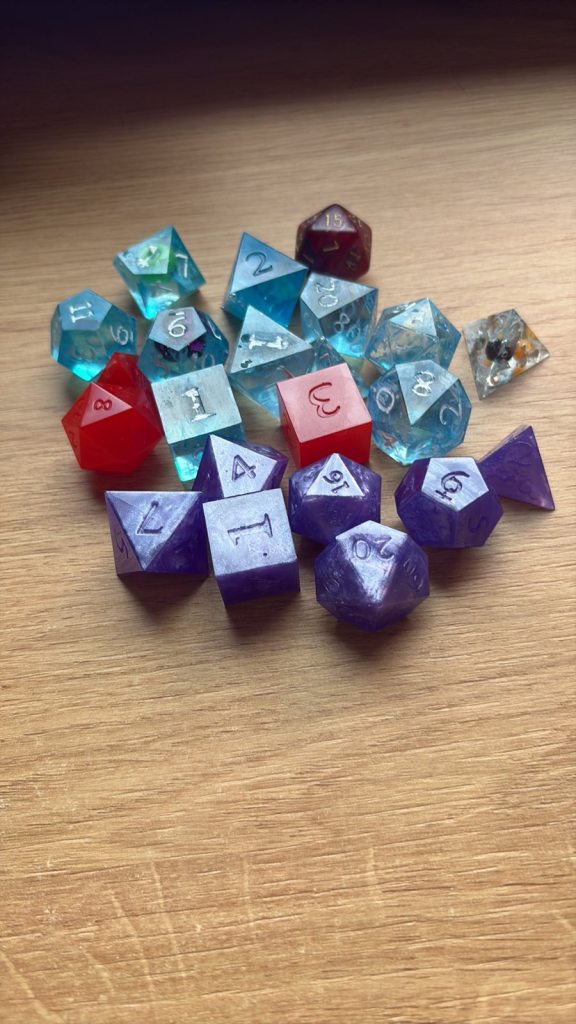
In the midst of all this, we made a batch of purple to finish up our chess board and pieces. This is where the problem started. Up until this point, everything had pretty much gone to plan. We’d mix and pour, the resin would set, we’d remove it from the mold, then we’d sand the pieces, clean the molds and the whole process would start all over again. Except this time. This time, for some reason, the purple resin didn’t want to set fully. Some of the letters firmed up a bit but not 100%. And several of the chess board squares and pieces remained sticky. To say this was disheartening is an understatement. While we tried to figure out a way to solve the problem, we continued making other things (I picked up a mold for D&D dice). I watched a YouTube video about how to clean molds when the resin doesn’t set (put in the freezer for 15-20 minutes, then get your resin out quickly since it reverts fast to its liquid state). We made a new set of purple pieces, but we still had the board problem.
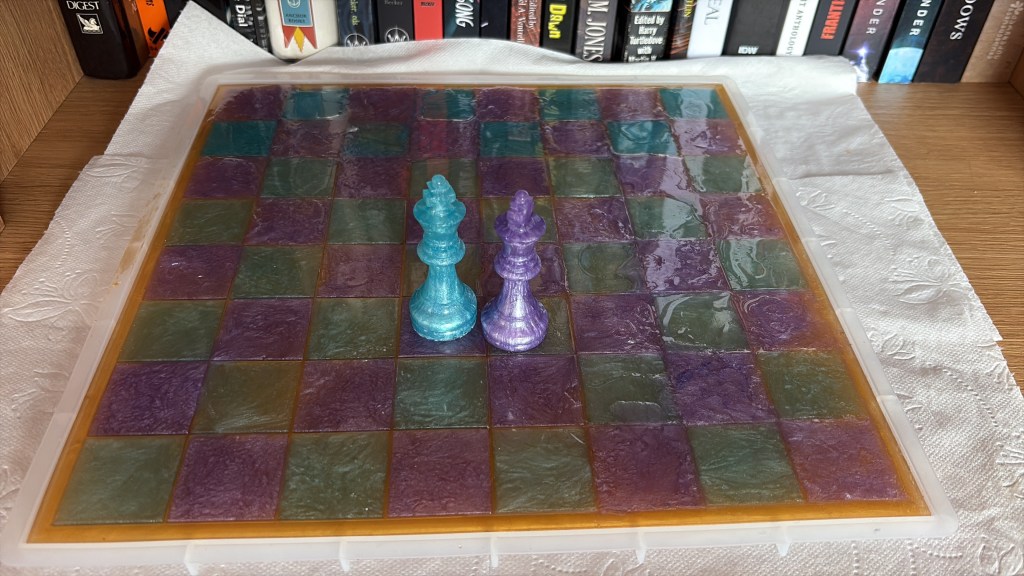
Thinking we could basically overdub it, we poured a gold layer of resin over everything (something we needed to do anyway, to bind the squares together) in the hopes it would cover the sticky bits. After a week and a half of drying time (normally it should take no more than 24 hours), it was still bad. We had one last shot, paint it over with clear. We tried and it still wasn’t coming together.
That’s when Monki surprised me. “We should just take the L on this one, daddy,” she said. Seems that watching Crunch Labs had taught here that sometimes, things don’t work the way you want them to and instead of getting the “W,” you have to accept the “L” and try again. Honestly, for a kid as sensitive as this one, who will fall apart at the slightest set-back, this was the biggest “W” I could imagine. The fact that she was upset that it didn’t work, but was still excited about trying again and hoping for the best was just amazing.
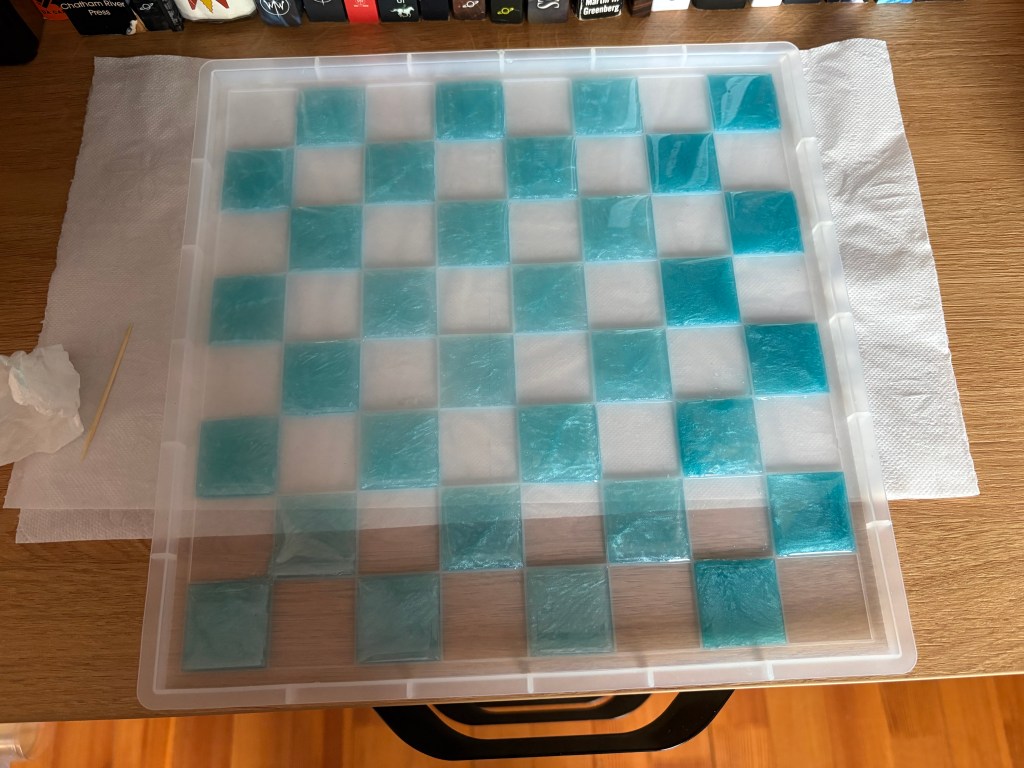
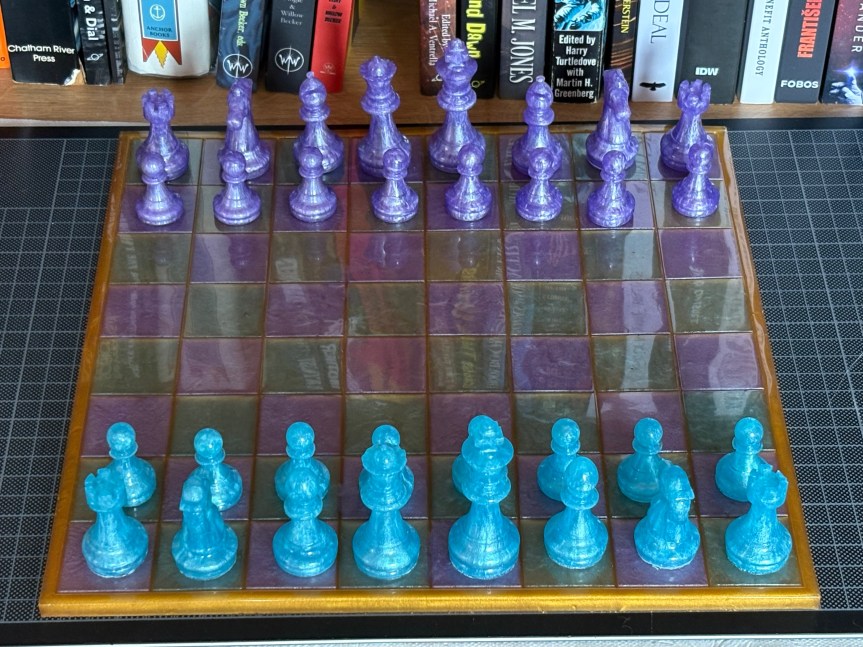
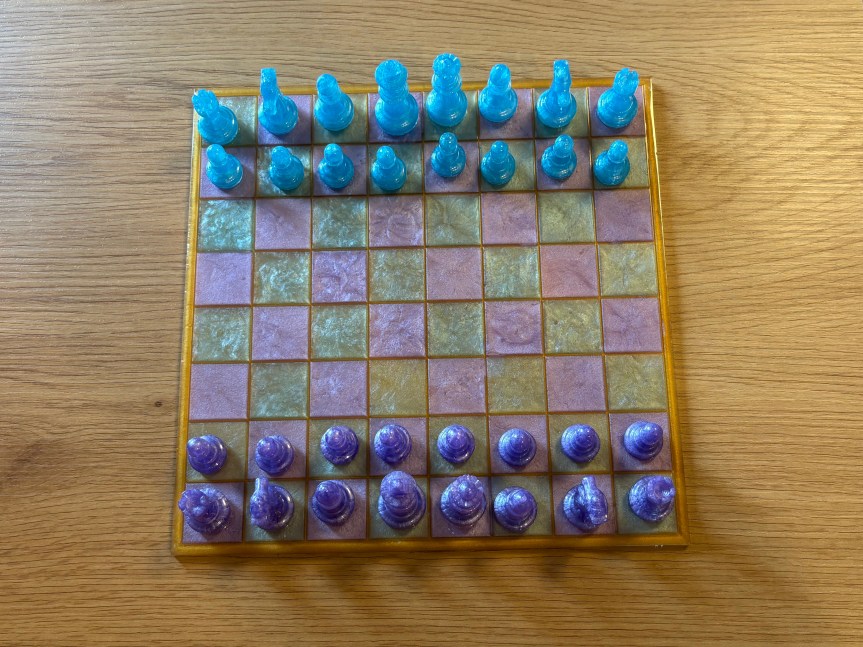
So we did. Same colors and everything (we already had a complete set of blue and purple pieces we didn’t want to waste). We made the blue squares, and we even made them better than our first try. We’d learned a bit about how the resin worked and how to best apply it in the way we wanted. They set perfectly. Then it was time for the purple, the bane of our existence. We mixed it up, applied it to the empty squares… and waited a couple of hours. Everything seemed to be working okay, but we had to make sure, so we waited until the next morning and sure enough, the purple squares had set up just fine. Now all we needed to do was cover the whole board with a backing of gold. We mixed that up last night and this morning, when we checked it, it was solid and dry. We left it in the mold so it could finish curing, but we had succeeded. We had our chess board. Let the games begin!
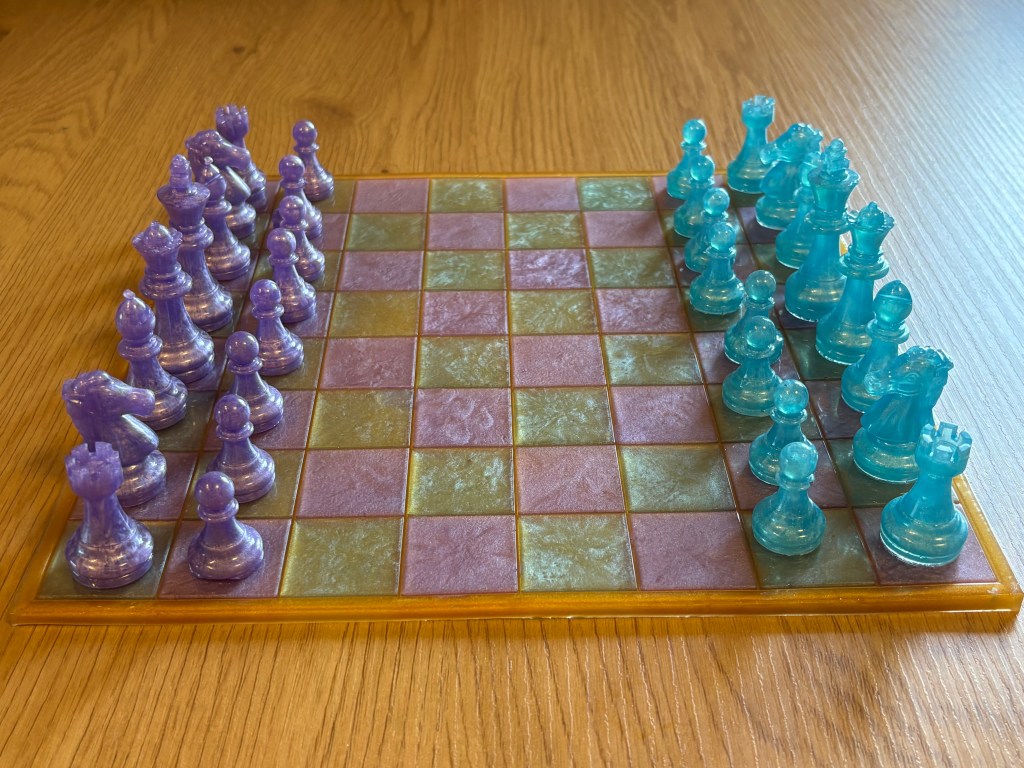
We’d also decided we really liked this as a creative activity and have bought even more molds to make holiday presents for everyone this year. With thanks to Mark Rober and Troy and Katie, this one is definitely a huge check in the Win column.
*If you’re sending something to us, Amazon EU/DE is the way to go since we don’t have to pay any import or duty fees if the product originates inside the EU. Used to be able to get stuff from Amazon UK, but that went away after Brexit.
**a bit of academic style creeping into my blog prose


Megatron has been hooked on Mark Rober too. It’s a great channel to watch. Some of his guests have great channels too.
Taking the ‘L’ and trying again is a HUGE ‘W’.
Absolutely! And Monki has a subscription to the Crunch Labs boxes and she loves them!
Wow. That was Absolutely wonderful, inspiring & super creative. I love the final board & chess pieces & the journey getting there. The cat & candle holders are Really beautiful. My friend Roch B has been playing with resins & sent me a variety of coasters that he made. Some even glow in the dark. They’re super fun. Science & creativity is a fabulous combo. I really need to get out there to visit. 🙂
You really do!! We’d love to see you!!