 A while ago, I particpated in the Kickstarter to get this statue cast and in place.
And now there’s a live webcam going so you can see it anytime.
In case your day needs a little Bowie.
A while ago, I particpated in the Kickstarter to get this statue cast and in place.
And now there’s a live webcam going so you can see it anytime.
In case your day needs a little Bowie.
 Reading a collection of short fiction from any given author is always a mixed bag. Same goes for an anthology of works by different authors centered around a certain theme or category. You might like some and some, well, they round out the collection.
But when you have a “Best of” collection, especially one curated by another well known writer or editor, well then, that’s a great way to start a good library. And that’s what Tor.com talks about in this article featuring A Survey of Some of the Best Science Fiction Ever Published (Thanks to Judy-Lynn Del Rey). While I’ve read some of these, and own several, a bunch more are going on my wish list.
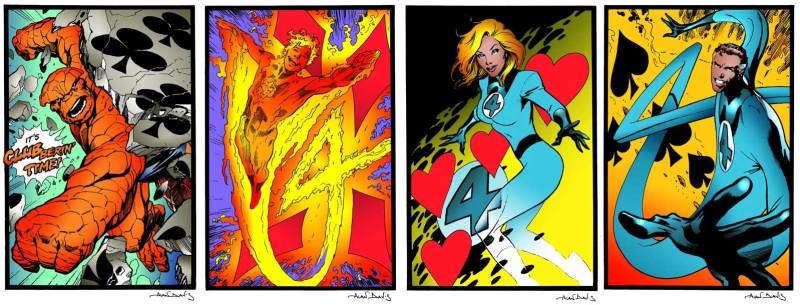 “Back in 2001, 65 of the world’s leading comic book artists illustrated a deck of playing cards to raise money for the British charity Childline, as part of the 2001 Comics Festival in Bristol.”
I had no idea about this, but as it combines my love of comics and my love of playing cards, I felt it was something I needed to let others know about. The whole story, Card Sharp: flashback to when Comic Creators delivered some ace playing card art for Childline, along with images of all the cards, is here courtesy of downthetubes.net and it’s great. It’s been 17 years since this happened and needs to happen again.

Recently, I was asked by the Baltic Summer University to give a lecture about how I ended up in Lithuania. I titled the lecture Stranger in a Strange Land: How I went from All-American to part-time Lithuanian. That picture to the left is from the talk.
This was all well and good until it came time to actually start to put the lecture together and I realized I didn’t really know what I was going to talk about for 90 minutes. I mean come on, even if you had Neil Armstrong come in for a lecture, he probably didn’t talk more than 60, and he actually did something important (although, if you ask him, it weren’t no big thing). Continue reading ““So there was this girl…””


This image is from issue #3 of Mark Gruenwald’s 1983 4 issue miniseries about Hawkeye.
For a long time, the phrase at the bottom of the frame, “Gosh, I love arrows,” has been a shorthand for me, for the lopsided pleasure that something small can bring.
In this story arc (and I highly recommend reading it), Clint Barton has a really bad day. The kind of day they write country songs about. And he doesn’t know how to carry on doing what he’s supposed to do. But then he gets some help and the clouds part a little bit. There’s a tiny ray of sunlight and he clings to it, fighting for every bit of space between the clouds until he’s standing in the noon sun again.
I think sometimes I just need this reminder. That no matter how bad the world is, no matter the set-backs personally or professionally, no matter the often encroaching darkness, that there are some good and happy moments. Small things that can bring a smile and let you know it’s okay to continue to fight.
Gosh, I love arrows.
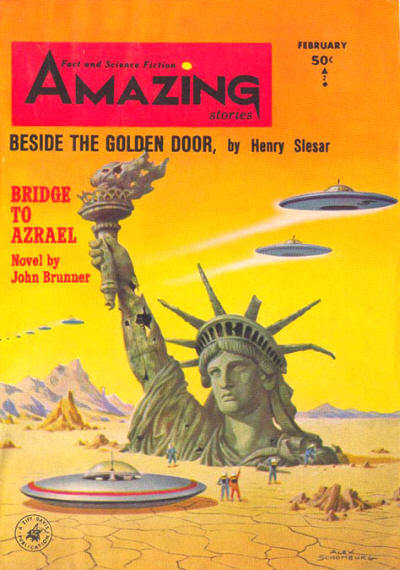
You know I love me some science fiction. This post, over on the tumblr site Vintage Geek Culture, is a great dispelling of the “truths” of the pulp era. Like Chuck Wendig’s post about the “Sacred Cows of Writing Advice” and Dean Wesley Smith’s books on the myths of conventional and indie publishing, it’s great to see critical looks at the way we’ve always believed things to be.
While there is always a core to these “truths,” there’s also an equal number of examples which show there is more to it.
 Okay. Honestly, I have no idea what to do with this post. It is, quite literally, 3347 free SVG and PNG icons for your games or apps from Game-icons.net.
Now here’s the thing: I’m not an app or game designer. I have no practical use for these icons in any way, shape, or form. That said, I love them all and want to figure out a way to use them in something. Maybe I can print them out and attach them to dice, a la story cubes (which, if anyone wants to get me some, I’d gladly accept). Or maybe I can use them as icons for my various folders (is that still even a thing?). Whatever the case, I just think they’re cool. And so I’m sharing them with you.

I have this theory on the evolution of the knowledge of surrealism. You start off with an appreciation of M.C. (Maurits Cornelis) Escher as you start to understand art in general. Here are illustrations designed to play with your sense of perception. His images have been co-opted for jigsaw puzzles and t-shirts and posters (not to mention set design). Continue reading “Boston Public Library Put Its M.C. Escher Collection Online, So It’s Time to Redecorate Your Dorm Room”

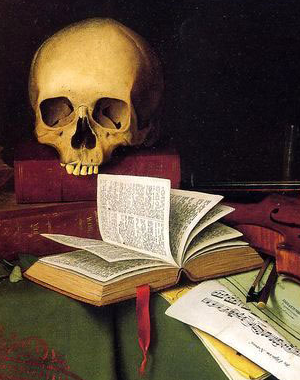
A few days ago, a piece of news came over my Facebook feed about a high school friend. It was his wife, posting on his account, that he had passed, suddenly and without warning, the night before. Now, he and I weren’t necessarily close in high school, and we were facebook friends but hardly ever interacted outside of some casual “likes” on random posts from time to time, but for some reason, his death got me thinking. Continue reading “On Mortality”
 Several years ago, back when I was regularly attending pub quiz, I met a woman who was the head of a primary school. Being a native English speaker, she had asked me if I could possibly come and be part of a jury for an annual English/speech competition the school hosted. Naturally, I said yes and have been doing it now for several years. In addition, I’ve also done some recording for her as the voice on the audio portions for grammar school English books (and, I was just informed, the English teacher in the books was named for me!) Continue reading “On Judging English Competitions”
 So I posted this on Facebook, but it seems like it needs a more permanent home. Therefore, posting it here.
And while it’s true this is piece is focused on Gaiman, there are a number of really good links which are just as important to the truth of reading and storytelling that I wanted to keep it nearby. “Truth is not in what happens but in what it tells us about who we are.”
Source: Neil Gaiman on Why We Read and What Books Do for the Human Experience – Brain Pickings
 Each region in the United States, from “Yankeedom” to “El Norte,” has its own cultural identity, says author Colin Woodard. This is a fascinating theory. While I’m not entirely convinced by the geographic breakdowns, it certainly makes a lot of sense as to why different areas of the country think the way they do. Continue reading “The US has 11 separate ‘nations’ with entirely different cultures – Business Insider”
 Was having to explain to my wife, who is from a different culture and generation, what a “clicker” was… after she was lamenting the “old days” of having to actually put the key in the car door to lock/unlock it. So here’s what we found. Enjoy “flipping through channels of the past to check out early television clickers that look like ray guns and complex calculators.”
Source: A history of the TV remote control as told through its advertising
 Getting the Hang of Thursdays